
In many laboratories, speed and precision matter just as much as accuracy. Whether you are preparing biological samples, separating blood components, or working with chemical mixtures, centrifugation is often a routine part of the workflow. This is where a swing out bucket mini centrifuge becomes extremely useful.
Despite their compact size, these devices play an important role in modern laboratories. They combine smart mechanical design with scientific principles to separate substances efficiently. If you have ever wondered how these machines work and why they are preferred in many applications, this guide is for you.
What Is a Swing-Out Bucket Mini Centrifuge?
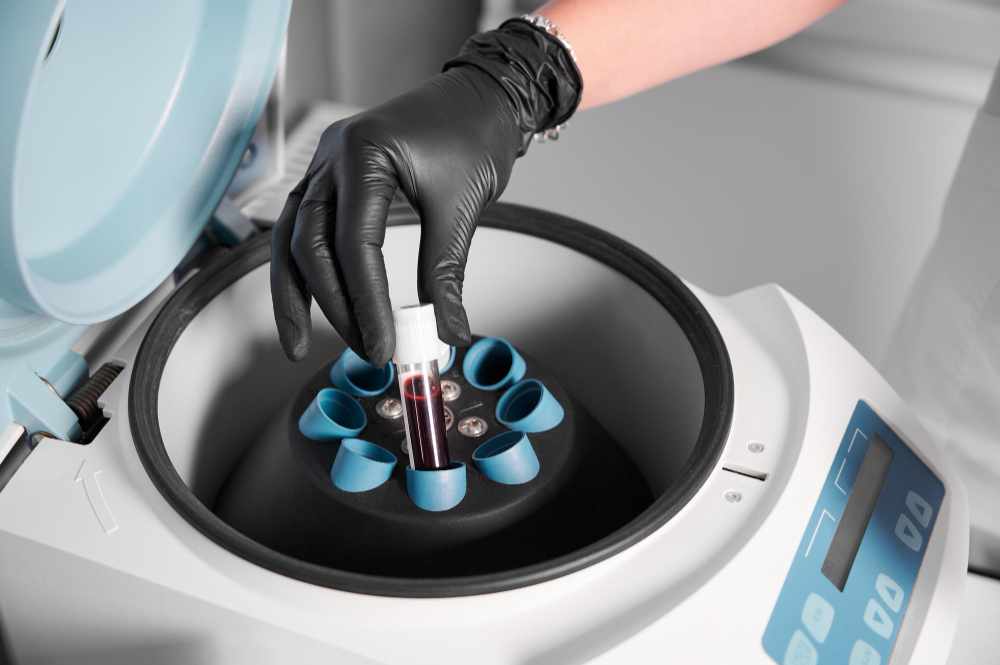
A swing-out bucket mini centrifuge is a small laboratory centrifuge designed with rotor buckets that swing outward during operation. When the centrifuge starts spinning, the buckets move from a vertical resting position to a horizontal position due to centrifugal force.
This swinging motion allows samples to align horizontally while spinning. As a result, particles inside the sample separate evenly and form clearly defined layers.
Many labs also refer to this design as a swing plate centrifuge, because the buckets are mounted on swinging plates or arms that pivot during rotation.
The Science Behind the Working Mechanism
At the core of every centrifuge lies a basic scientific principle called centrifugal force. When an object spins at high speed, particles inside the sample move outward away from the center of rotation.
In a swing plate centrifuge, this force causes the rotor buckets to swing outward until they become horizontal. This position is important because it allows particles of different densities to separate more effectively.
Here is how the process works step by step:
● The centrifuge begins rotating at high speed.
● The buckets swing outward due to centrifugal force.
● Denser particles move toward the bottom of the tube.
● Lighter components remain closer to the top.
● Distinct layers form within the sample.
This horizontal orientation creates a clean separation boundary, which is especially useful for biological and clinical samples.
Common Applications in Laboratories
Even though mini centrifuges are compact, their applications are quite diverse. Many laboratories rely on a swing plate centrifuge for routine procedures.
Here are some common uses:
1. Blood Sample Processing
Clinical labs frequently use these centrifuges to separate plasma or serum from whole blood. The clear layer separation helps technicians collect accurate samples for testing.
2. Cell Culture Work
Researchers often centrifuge cell suspensions to collect cells or remove growth media. The gentle separation helps maintain cell integrity.
3. Molecular Biology Experiments
Mini centrifuges are used for tasks such as spinning down PCR tubes, microtubes, and small sample volumes.
4. Chemical Sample Separation
In chemistry labs, these centrifuges help isolate precipitates from liquid solutions quickly.
5. Educational Laboratories
Their compact size and simple operation make them ideal for teaching labs in universities and training centers.
Why Mini Centrifuges Are Becoming More Popular
Laboratories today often face space constraints and increasing workloads. A swing-out bucket mini centrifuge offers a practical solution by combining efficiency with portability.
Some reasons for their growing popularity include:
● Space-saving design for crowded lab benches
● Quick setup and easy operation
● Lower maintenance compared to larger centrifuges
● Energy-efficient performance
These factors make them a smart investment for both small labs and large facilities looking to streamline routine workflows.
In Closing:
A swing plate centrifuge may look like a simple device, but it is built on powerful scientific principles. By using centrifugal force and a smart swinging rotor design, these mini centrifuges deliver reliable and precise sample separation.
For laboratories that handle small volumes but require consistent results, a swing-out bucket mini centrifuge offers the perfect balance between performance, convenience, and efficiency.
Understanding how this compact machine works also highlights an important truth about laboratory equipment. Sometimes the smallest tools play the biggest role in scientific progress.



Write a comment ...